I’ve been thinking a lot lately about how difficult it is for scientific organizations to see demand early enough to respond with clarity and timing.
In many cases, demand only becomes visible once it reaches an operational threshold: registrations begin to rise, abstract activity begins to pick up, sponsor interest increases, or a topic becomes prominent enough that it is impossible to ignore in meeting planning conversations.
Those signals matter. But they are often late.
By the time demand is obvious, the most valuable window for interpreting it may already have passed.
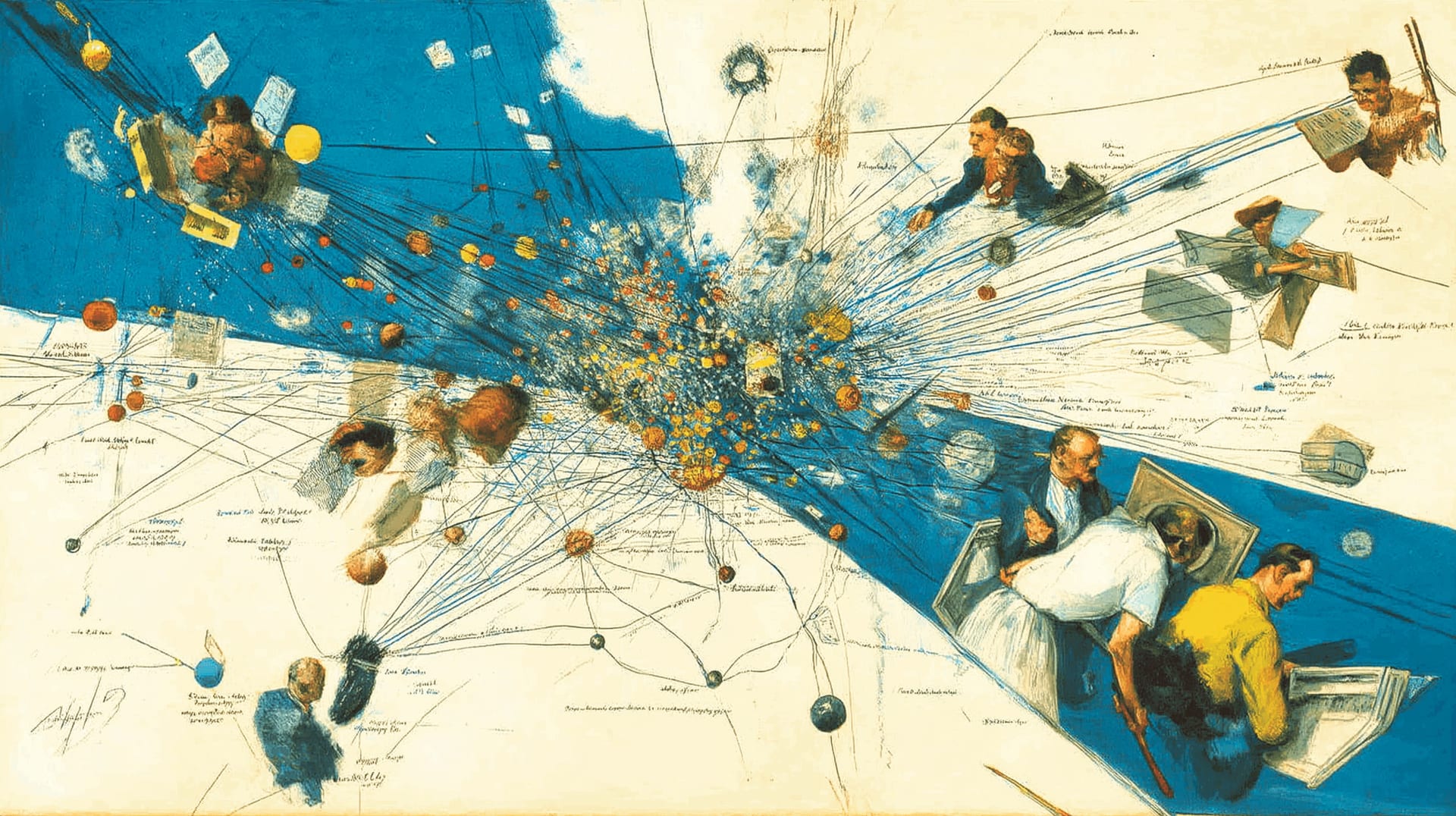
What makes this difficult is that scientific demand rarely appears in one clean, measurable form. It tends to emerge gradually through a wide range of weak and distributed signals: new activity in the literature, shifts in grant funding, recurring attention around particular scientific questions, changing patterns of collaboration, or growing interest in specific methods, mechanisms, or disease areas.
None of these signals alone is enough to define a trend. Taken together, though, they can begin to reveal where scientific energy is moving well before that movement appears in conventional conference planning metrics.
That is the core strategic question my team and I have been trying to answer.
A central focus of our work has been exploring how to move from fragmented scientific and operational data toward something more interpretable—something that can help an organization understand where attention, momentum, and future demand may be building before they fully surface in the usual downstream indicators.
This is not simply a matter of collecting more data. In most environments, there is already plenty of it. The real challenge is that the signals are fragmented across systems, formats, and contexts. Some are structured; many are not. Some reflect direct intent, while others reflect emerging attention that has not yet converted into action.
Without a way to interpret those signals together, organizations are often left relying on lagging indicators (like conference abstract submissions), institutional memory, and intuition.
There is real value in intuition, especially in experienced scientific organizations like ours. But intuition does not scale easily, and it becomes harder to rely on when fields are evolving quickly and communities are shifting in more complex ways.
That is where a more deliberate intelligence framework becomes valuable.
I’ve become increasingly interested in the idea that research activity can be treated not just as background information, but as evidence of scientific attention and momentum. A publication is not just a publication. A grant is not just a grant. An abstract is not just a submission. Each can be interpreted as part of a broader pattern of engagement with particular scientific problems.
When those patterns are classified consistently, connected across sources, and interpreted in context, they begin to form a more useful picture of where a field is concentrating effort—and where future demand may be building before it becomes operationally undeniable.
This is where work around data architecture, scientific classification, and AI becomes genuinely interesting to me. Not as an abstract technology, and not as innovation theater, but as a practical way to help institutions see more clearly.
The opportunity is not simply to produce more reporting. It is to create better ways of detecting emerging relevance, interpreting signal earlier, and supporting better strategic decisions about what communities to convene and where to invest organizational resources.
Most organizations are not short on information. They are short on systems that help them distinguish signal from noise early enough to matter.
And if we wait until demand is obvious, we are often already late.