Margin marks
6 human-approved annotations, anchored to the article text.
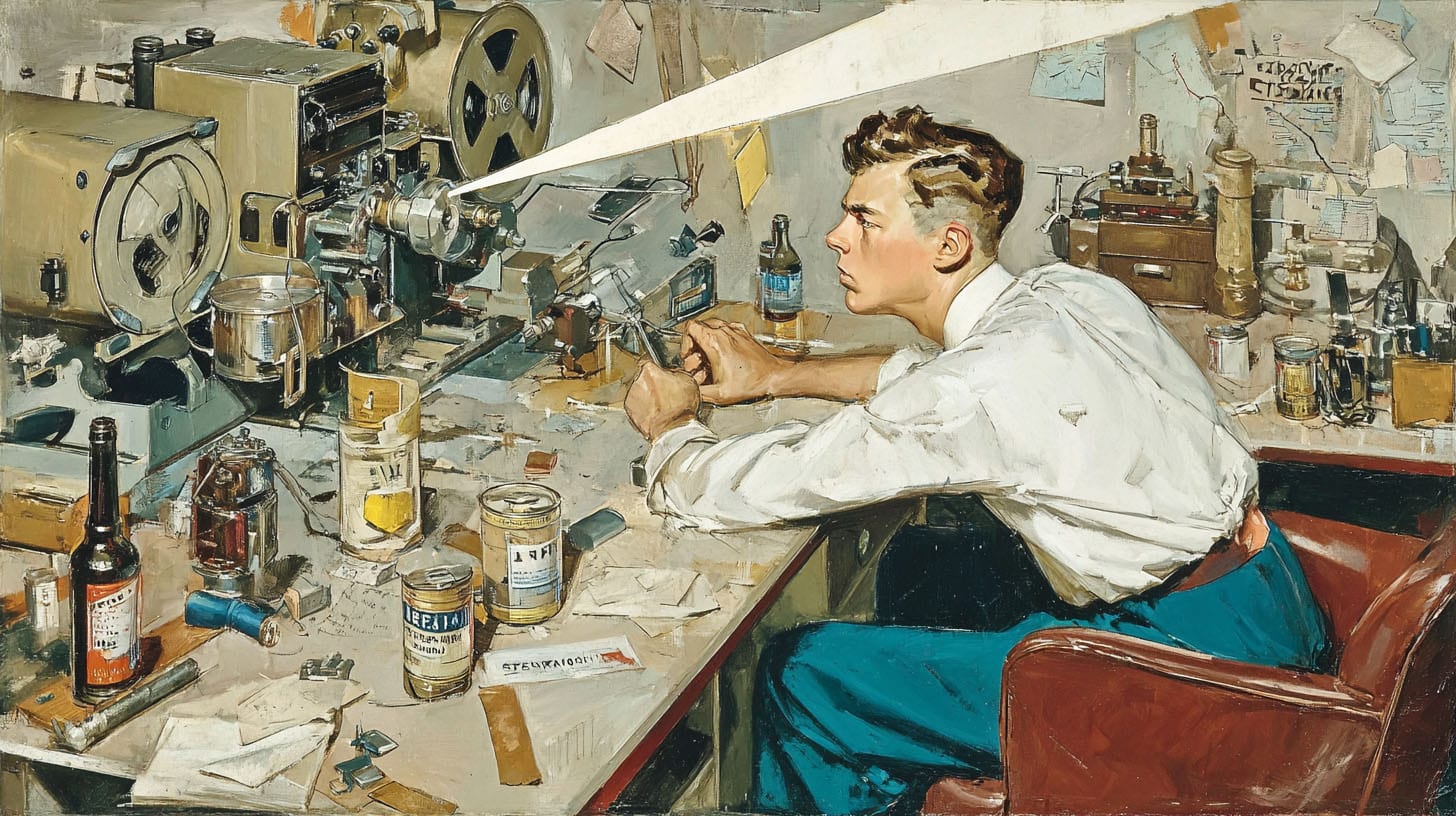
When I was fifteen, the manager of our local Skyline Cinema 8 presented me with what can only be described as a once-in-a-lifetime career opportunity: he handed a teenager the keys to the projection booth.
This was during the swan song of the film era, when movies still arrived as physical objects and projection booths smelled like super-heated metal, cheap carpet, and rubbing alcohol. I was already a movie nerd, which was my sole qualification for this position of tremendous responsibility.
The job was technical in the old sense. You built reels on dual platter systems. You threaded film through the projector. You cleaned the machine, one sprocket at a time, until you could not wash away the smell of alcohol. You learned what could go wrong because eventually it did. A splice failed. A reel scratched. A projector jammed. A theater of people discovered, all at once, that cinema was not magic. It was a machine upstairs being operated by a teenager making slightly above nothing. But you know what? I got good at it.
Nobody sent me to projectionist school. Nobody gave me a certificate. Nobody convened a panel of credentialed experts to determine whether I possessed the necessary competencies to watch the first 5 minutes of Shrek one-hundred times . The work needed doing. I was there. Someone gave me the job.
I think about that every time someone talks about expertise as though it only arrives through proper channels.
A lot of expertise is real. I want to say that clearly. Some expertise keeps bridges standing. Some keeps patients alive. Some prevents databases from becoming junk-drawers. Some expertise is hard-won, specific, disciplined, and morally serious. There are people who know things that I will never know, and I am grateful for many of them.
But expertise is also a social arrangement. It is not only what you know. Sometimes it is whether you are recognized as the sort of person who is allowed to know. And that recognition has never been distributed fairly.
Some people inherit proximity to expertise. They grow up near the right schools, the right parents, the right expectations, the right vocabulary. They are given time to become promising. They are allowed to be awkward beginners in rooms where awkward beginning is treated as potential rather than evidence of stupidity.
Other people encounter systems from the service entrance.
They learn machines by being scheduled by them. They learn software because the person who knew quit. They learn operations because something broke and everyone looked at them. They learn management because somebody needed to control damage. They learn people because customers, bosses, vendors, coworkers, and strangers keep arriving with needs, demands, and baggage.
This is one of the lies hidden inside the word "menial." It suggests that some work does not require intelligence when what it often means is that the intelligence is inconvenient to recognize. The economy depends on people solving problems without being promoted into the category of "problem solver."
So yes, expertise is real. But so is gatekeeping. And sometimes the gatekeeper is protecting the public from harm. Sometimes he is protecting his billing rate. Sometimes he is protecting first fruits and offerings above and beyond 10%.
AI has begun to disturb that arrangement.
Not because it makes everyone an expert. It does not. That is fantasy, and a dangerous one. A person with a chatbot and confidence can absolutely build a mobile-responsive disaster with buttons.
But AI does something more specific and more disruptive: it lets people approach the performance and application of expertise before the old institutions have decided they are allowed to have it.
The first version may be bad. Very bad. But bad is not nothing. A crude prototype changes the social situation. It gives the person with the idea proof. It lets them argue from something instead of merely toward something.
For a long time, many professions derived power from translation scarcity. They were the people who could make the machine listen. The code, the contract, the camera, the database, the design software, analytics platforms, the institutional language: these were not just tools. They were moats. AI does not drain every moat. But it throws planks across some of them.
That is why the hysterics have been so revealing.
For decades, blue-collar workers were told to adapt. Textile workers were told to adapt when mechanized looms broke the old craft bargain. Farm workers were told to adapt when tractors and combines pushed millions out of agriculture. Telephone operators, longshoremen, drivers, cashiers, and everyone else fed into the optimization furnace were told the same story: technology moves forward, markets change, learn new skills, relocate, reinvent yourself, stop standing in the way of progress.
Then the machine gained hold of the laptop class, and suddenly automation became a moral emergency.
The setting matters. When Ronny Chieng told Harvard graduates that their generation's mission was to "destroy AI," the line landed in one of the symbolic headquarters of credentialed authority. The students reportedly cheered, which is not difficult to understand. They are graduating into a labor market being actively reorganized beneath their feet, and Chieng's better point, that AI can rob people of the difficult, satisfying work of creation, deserves to be taken seriously. But Harvard is not a neutral room. It is not a warehouse break room, a call center floor, a truck stop, or a retail counter. It is a room full of people trained, however nervously, to inherit the professional world.
They do not hate useful software. They do not hate tools that make work easier. What AI threatens is more specific: the authority structure that taught them fluency, polish, credentials, and proximity to elite institutions would remain scarce. The machine is not merely coming for tasks. It is coming for the uniform of expertise: the memo, the polish, the confident summary, the correct vocabulary. And when that uniform becomes easier to imitate, the people who paid dearly to wear it suddenly discover that disruption may have ethical implications.
Now we are asked to consider the sanctity of craft. The dignity of labor. The dangers of deskilling. The risks of low-quality output. The importance of human judgment. The tragedy of a profession being hollowed out by tools that make the work faster, cheaper, and easier to monitor. All true.
This is not an argument against programmers, designers, writers, lawyers, analysts, consultants, academics, evangelists, or any other symbolic worker looking at AI and fearing replacement. They are workers too, whether or not their LinkedIn profiles have fully processed that fact. I am not interested in cheering while anyone gets fed into the machine.
But I am not willing to overlook hypocrisy, especially when it asks the rest of us to mistake status protection for moral clarity.
The fact is that many knowledge workers did not oppose automation when it took somebody else's job. They opposed it when it threatened to proletarianize them. The people who previously watched their industries get eaten by efficiency were often treated as unfortunate but necessary sacrifices to progress. Now that AI can produce code, write memos, summarize research, generate design, draft contracts, and simulate the surface of professional polish, suddenly everyone wants a long conversation about preserving the virtue of hard, honest, decent labor.
That's good. But we should have had that conversation earlier.
I believe in craft. I really do. My parents are musicians. My dad was a career A/V tech, and through osmosis and/or discipline, I learned that sound is not just a sound. There is good audio and bad audio, and not being able to hear the difference is essentially a character flaw. I write. I have painted badly. I gambled a college degree on a B.F.A. in film. I have worked in event production, digital media, marketing, IT, and enough adjacent trades to know that skill is not fake just because a machine can imitate the end-result. I know what it feels like to get better at something slowly. I also know markets do not reliably reward soul, effort, taste, practice, or human invention.
Markets reward outputs that can be bought, sold, accelerated, and measured by people who often could not produce the thing themselves. They reward fit, speed, leverage, distribution, and ownership. They reward whatever can be turned into margin. If human craft happens to survive inside that arrangement, wonderful. But the market does not love craft. It loves craft-shaped value that can be resold.
This is where the word "slop" gets interesting.
AI slop is real. There is no need to deny it. The internet is filling with a beige content slurry, synthetic ads, vacant essays (lol), fake books, fake bands, fake reviews, fake everything. A whole economy of generated nothing is already oozing through the cracks.
But "slop" is also becoming a lazy class signal. Sometimes it means low-quality machine output. Sometimes it means spam. Sometimes it means theft or fraud. But sometimes it simply means unauthorized production: people making things without permission from the intelligentsia.
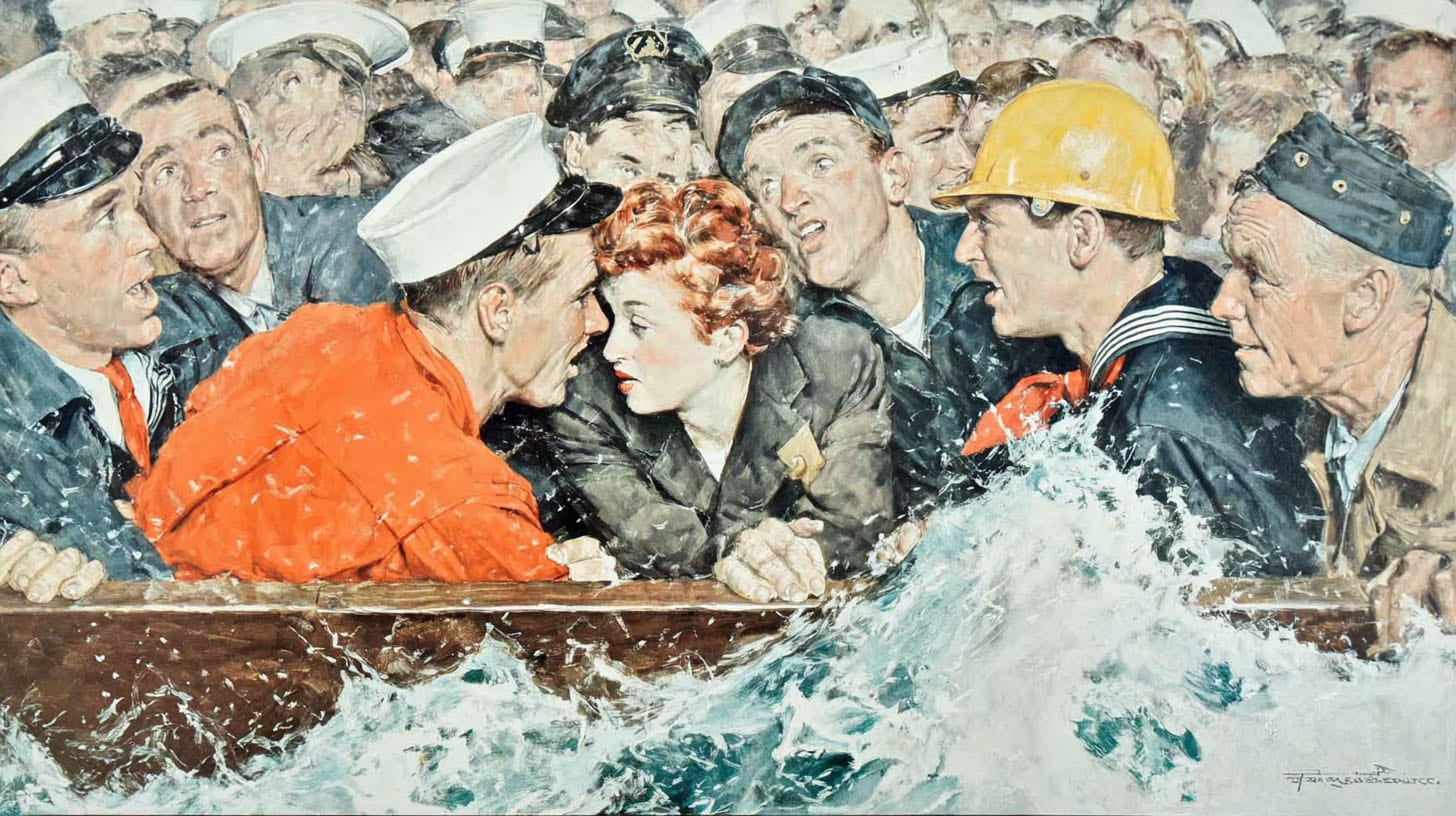
Every democratized tool produces a wave of terrible first attempts. But terrible first attempts are not evidence that people should be denied tools. This does not mean all production is good. It means the right to make bad work has historically been part of becoming capable of making better work. Gatekeepers often describe this flood as a decline in standards, but what it really threatens is scarcity. But culture has always been partly built out of people making things before they are ready, before they are approved, before they are respectable.
The first draft is often ugly. So is democracy.
This is where the celebration sours if we are not careful. Because the same systems that let ordinary people build, write, design, code, analyze, and produce without permission are mostly owned by corporations with no particular interest in human freedom. The gate may be weakening, but the path beyond it increasingly runs through private platforms, rented models, opaque terms, surveillance infrastructure, and monthly pricing tiers.
That is the contradiction we have to sit with. AI may make expertise harder to hoard, but it may also make capability more dependent on companies that can change the price, change the rules, close the model, throttle the tool, scrape the work, or monitor the user.
So the fight is not between expertise and ignorance. It is not between humans and machines. It is not between real artists and fake artists, real programmers and AI-assisted amateurs, sacred craft and digital garbage.
The fight is over who owns the tools, who sets the terms, who gets access, who gets paid, who bears the risk, and who gets told their contribution was never expertise in the first place.
The projection booth taught me something I did not have language for as a teenager. Expertise matters. Training matters. Sometimes the gate is there because the machine can burn, jam, tear, or otherwise fail in front of two-hundred paying customers. But expertise and permission are not the same thing. A key can keep people safe. It can also keep people small.
Every so often, the gate is left open by accident. Someone trusts you with the machine before the world has decided you are qualified. And once you have threaded the film yourself, once you have watched the image appear because your hands made the machine work, you understand what a gift that is: not the job itself, exactly, but the chance to become capable.